By this point, the anti-liquor motion had actually attracted enough support in its platform of alcohol being the source of society's ills, which those who drank and got intoxicated were suffering from ethical decay. By 1920, United States Congress ratified the 18th Modification to the Constitution, which banned the production, sale, and public usage of alcohol.
The etymology of the word ethical comes from an Old French word, implying "referring to character," and this was how the general temperance motion even after the failure that was Restriction provided substance abuse: that those who drank to excess were ethically insolvent and void, all too happy to give up to their baser impulses. how to overcome drug addiction.
The dominating view of alcoholics slouching sinners who did not have the perseverance to say "no" to a beverage rang highly in the ears of Bill Wilson as he put together the foundations of what would become Alcoholics Anonymous. AA was the very first recognized group to use the word illness when speaking about alcoholism, presenting not just a radical concept of treatment, however including that addiction was something that could be treated like an illness.
Similar to many individuals, addicts walk the line in between what they desire and what it costs to have those things. While the moralistic point of view presents the addict's needs as enjoyment and fulfillment, the illness theory presumes the addict's needs as an escape from a life of stress and anxiety, trauma, and depression however the mental void in their lives manifests itself.
She also points to the well-established research that http://ricardoxdmm526.wpsuo.com/the-basic-principles-of-what-are-some-drug-addiction-treatments has actually identified complicated biochemical procedures under addiction. Dependency has its basis in neurophysiology, she says, which swings the pendulum in favor of the illness design. The Washington Post explains that individuals who have substance usage conditions have brains that make it difficult to resist the pull of addictive alcohol and drugs.
The human brain naturally produces dopamine, a neurotransmitter, whenever an individual carries out an action that is associated with survival Check out this site or breeding. Such actions, like eating and making love, likewise provide humans a sense of pleasure, a kind of evolutionary side result to motivate us to keep doing things that keep us alive and keep the species going.
Little Known Facts About How To Explain Drug Addiction To A Child.
Someone snorting cocaine or injecting heroin into their veins will experience a flood of dopamine that is simply unparalleled to anything else. The brain is required to pump out greater quantities of dopamine than it should, even as it tries to manage the neurotransmitter's production. Gradually (ranging from a single use to days or weeks, depending on lots of aspects), drugs or alcohol end up being the only method for the person to get that exact same rush of dopamine, that exact same rush of enjoyment, that very same sense that the only method to make it through is by taking more cocaine, more heroin, or more alcohol.
Nothing will ever duplicate the sensation of the very first time, but the brain ends up being so warped and hooked on the drugs that the chase continues. This understanding of neuroscience has opened the door to additional insights into how dependency, as a disease, works. It describes why individuals who have recovered from their dependencies can still struggle with temptation or regression: not because they are inherently bad people, but since the parts of the brain that are accountable for dopamine production have actually been primed to associate anything resembling past substance abuse with satisfaction.
This is why a recuperating alcoholic can not go to a bar not since of a character flaw, but because the smells, sights, sounds, and environment of a bar (or other place where alcohol is easily readily available) will unknowingly set off a dopamine reaction and the inspiration to look for more satisfaction sources.
Nora Volkow, now the director of the National Institute on Drug Abuse compose that because "all [addictive] compounds operate in a comparable way on the benefit system," the concept of dealing with dependency as an issue of morals that a person user has much better or lower self-discipline than another can not stand. Other scientific advances have likewise illustrated why what we understand now about dependency, compared to what we used to understand, offers trustworthiness to the illness theory.
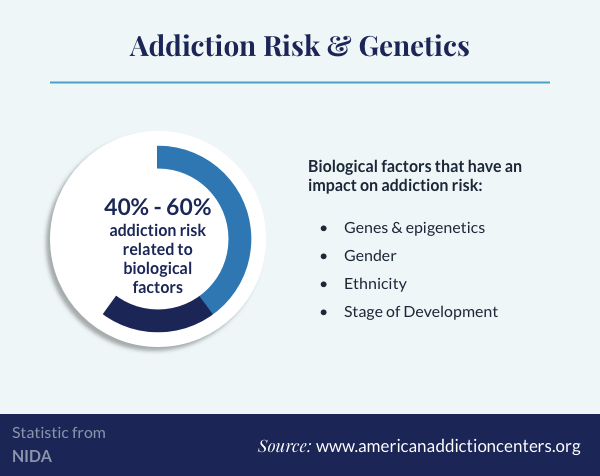
It overemphasizes the case to the point Homepage of inaccuracy to say that "genes trigger dependency," but the National Institute on Substance abuse reports that genes represent 40-60 percent of the opportunity that an individual might be prone to developing a substance use condition. Offered those chances, the argument about substance abuse being a concern of morals or character ends up being much weaker.
NPR compares the different tones with how the prospects for the 2016 United States presidential election shared stories about their enjoyed ones coping the "illness," and their predecessors from the 1980s and 1990s who embraced a substantially harder tone. Vox called the focus on the more forgiving approach to drug dependency "one of the unanticipated advantages of the 2016 elections," as Carly Fiona and Donald Trump both informed stories of losing member of the family to addiction.

Would Most Quickly Result In Dependence Or Addiction Would Be: Fundamentals Explained
This is not an ethical failing," at a town hall occasion in February 2016. In August 1986, on the other hand, President Ronald Reagan guaranteed that his administration would "decline to let drug users blame their behavior on others." Christie's insight into the nature of addiction may originate from his mom being a long-lasting cigarette smoker and losing a friend to dependency.
If the substance of choice is heroin or cocaine, Christie said, the agreement is that, "They chose it," and "They're getting what they deserved." No one, nevertheless, stated that about his mother. Discussing his good friend, Christie argued that compound abuse "can happen to anyone," even somebody who, like his friend, had a "great career and household." The solution, he said, was to use treatment, not jail time.
Bush Jeb's dad talked from the Oval Office where he said the country required "more jails, more jails, more courts [and] more prosecutors." However a lot has actually changed because the last decade of the 20th century. An improved understanding of substance abuse, and individuals who struggle with it, has led to more state and city governments adopting policies towards addicts that treat those individuals as victims, not wrongdoers.
A program in Seattle empowers officers to opt for people got for small drug offenses to consult with social workers, as opposed to sending them to prison. However, old habits take a long period of time to die. With a lot of the story from the 20th century having to do with how druggie and alcoholics were flawed people who should have extreme treatment and criminal penalties, some components of that message still persist today.
On the other hand, the same people who feel that way hold more positive impressions of those who have other mental disorders. The findings, which were published in the Psychiatric Providers journal, suggest that society has not yet accepted that addiction is a treatable medical condition in the same method that other health issues are - what is the difference between drug abuse and drug addiction.